Machine downtimes made visible
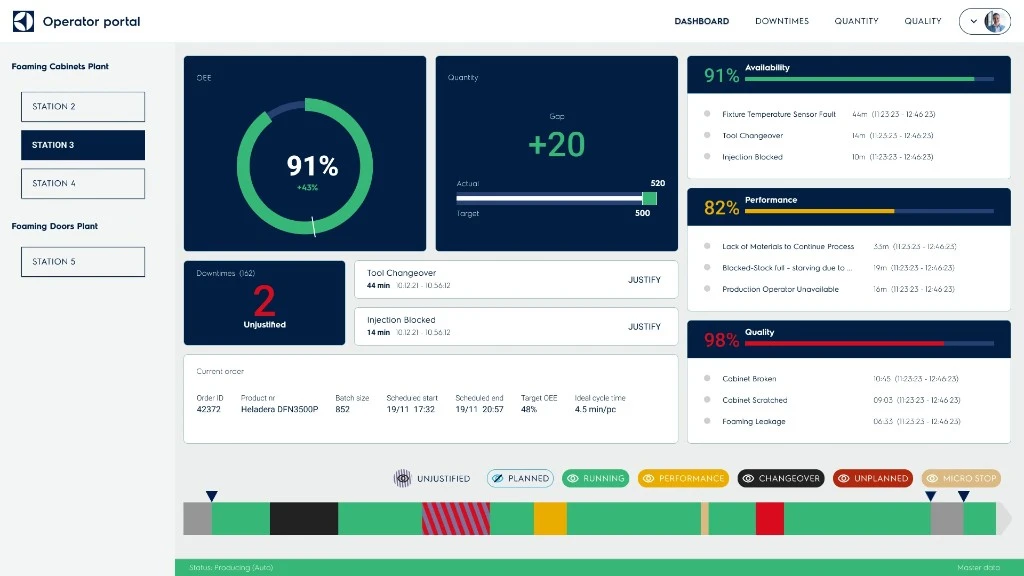
Electrolux
I turn dense, data-heavy screens into a system people love to use.
How I work
I run the research, design a solution, and build it.
I sit with the people who will use the thing, operators, engineers, and developers, in a room or fully remote. The workshop turns their reality into one roadmap everyone can build from. The design starts from evidence, not a guess.
Most of my work is large industrial systems with a lot of data and a lot of stakeholders. The data is messy, the users aren't data people, and my job is to surface the one thing they need to act on. I turn it into simple flows and dashboards they actually like to use.
I coded from the start of my career, moved into UX and coaching dev teams, then went back to building two years ago when AI changed how products get made. So the interface ships as the real thing, down to the components and the performance, not a spec passed over a wall.
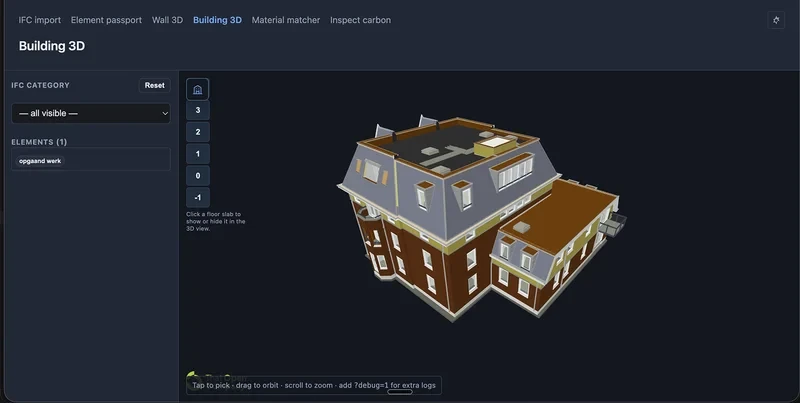
I've designed several AI products where the result had to make sense to the person using it. At Robovision I rebuilt a labeling tool so non-experts could train models quickly. For Unilin I built a human in the loop system where machine vision catches what the eye misses and the operator stays in control. Lately, dashboards that show provenance, to counter hallucination.
I run the research and the tests with the people who use it, then I change the design.
I lead the design. Engineers, product, and the stakeholders who own the outcome are in the room.
A system for an enterprise, then used by the teams that ship.
I design inside the constraint, and I build the interface in React and TypeScript.
A dense workflow, reduced to the decision someone has to make.
One product across sites and continents, for people who do not all work the same way.
Let's work together
I design and build products where the interface has to carry a complicated reality. Write to me.